Is Your Period Underwear Manufacturer Ready for Your Next Collection?
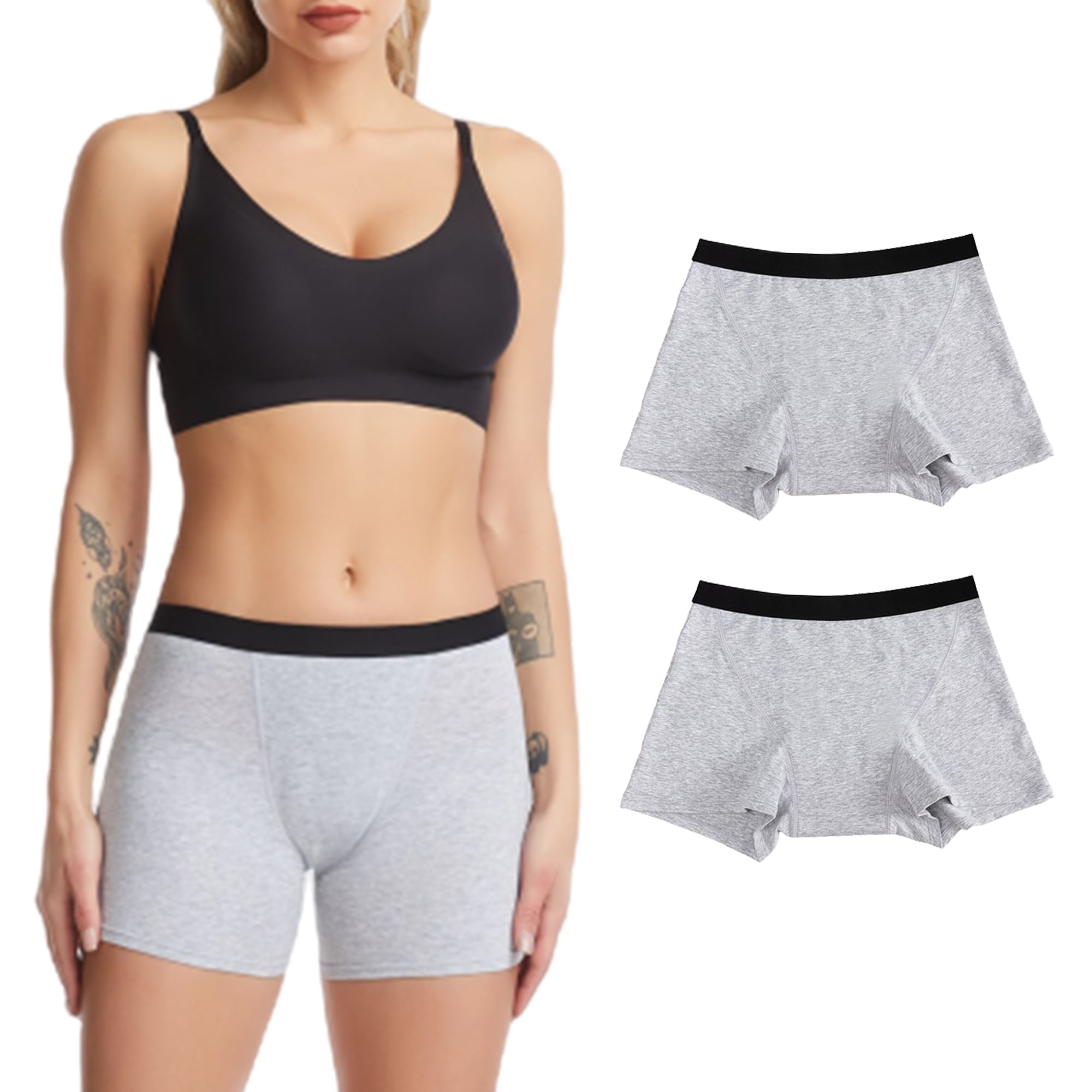
A manufacturer is ready for a new period underwear collection only when it can reproduce fit, absorbency, leakage resistance, wash durability, color, and labeling across bulk production—not just make an acceptable sample. A collection with 4 styles, 3 absorbency levels, 5 colors, and 7 sizes already creates 420 SKU combinations. Material tolerances, sewing accuracy, membrane bonding, gusset placement, and fabric shrinkage can vary between production lots. In 2025, AATCC TM135 defined four washing temperatures, three agitation cycles, and four drying procedures for dimensional-change testing. Before placing a larger order, brands should check material control, test methods, size grading, QC records, production capacity, and batch traceability.
A new collection normally increases manufacturing complexity faster than order quantity. Moving from one brief in 5 sizes and 2 colors to 4 silhouettes in 7 sizes, 5 colors, and 3 absorbency levels expands the product structure from 10 combinations to 420. Even when several combinations are not ordered, purchasing, cutting, labels, cartons, inspection sheets, and production records become harder to manage.
The first review should therefore focus on the factory’s bill of materials. Reusable menstrual underwear can contain body fabric, lining, absorbent textile, waterproof membrane, elastic, thread, labels, and bonding materials. A change in only one layer can alter thickness, stretch, drying time, sewing stability, or wash behavior.
For example, replacing a 180 gsm body fabric with a 150 gsm fabric reduces material weight by about 17%, but the lighter fabric may stretch differently around the gusset and leg opening. Adding a second absorbent layer may increase capacity while also increasing drying time and seam thickness. A manufacturer should document both changes before approving bulk fabric.
A sample that absorbs the target volume is not enough. The same construction has to remain within specification after cutting, sewing, washing, and repeated production.
That requirement makes material specifications more useful than supplier descriptions such as “soft,” “high absorbency,” or “waterproof.” A technical file should state fiber composition, fabric weight, usable width, stretch direction, shrinkage limits, membrane specification, absorbent-layer dimensions, and approved supplier.
US labeling adds another reason to keep the file accurate. Under the Textile Fiber Products Identification Act, fibers representing 5% or more of total fiber weight generally must be identified by generic name, while imported textile products must identify the country where they were processed or manufactured. Fiber percentages also have to match the labeled composition within permitted manufacturing tolerances.
| Production item | What the brand should request | Practical control point |
|---|---|---|
| Body fabric | GSM, composition, stretch, shrinkage | Compare every incoming lot |
| Absorbent layer | GSM, thickness, supplier, dimensions | Measure before assembly |
| Leak-resistant layer | Construction and resistance test | Check each material lot |
| Elastic | Width, elongation, recovery | Compare with approved sample |
| Finished garment | Measurements and appearance | Inspect by size and style |
Material control should then connect to laundering tests because period panties are washed repeatedly during normal use. AATCC TM135-2025 provides standardized procedures for measuring length and width changes after home laundering and includes four washing temperatures, three agitation cycles, and four drying procedures. Standardized conditions make supplier comparisons more useful than informal washing in different machines.
Shrinkage should be reviewed at garment level as well as fabric level. A body fabric that contracts 3% while a laminated gusset changes only 1% can create puckering, distorted seams, or altered fit after repeated washing. On a 300 mm section, 3% dimensional change equals 9 mm, large enough to affect underwear fit around high-stretch areas.
Color should receive separate testing. AATCC TM61 uses accelerated laundering to evaluate colorfastness; one 45-minute procedure is designed to roughly approximate the color change produced by five typical hand or home washes under specified conditions. The method dates to 1950 and has been revised as laundering practices changed.
A factory developing 6 colors should not test only black and assume pale or saturated shades behave identically. Dye chemistry, fiber type, finishing, and rubbing can produce different results by color. Each approved color should therefore have a physical or measured standard, with bulk lots checked against the same reference before cutting.
Absorbency needs equally clear rules. “Holds 40 mL” is incomplete unless the supplier identifies the sample construction, liquid, conditioning, application rate, wash history, test endpoint, and number of specimens. Testing 1 specimen gives almost no information about manufacturing variation; testing 5 specimens provides a basic range, while larger sample groups provide more useful production data.
A practical internal comparison might record 5 finished garments from the same lot and report individual results rather than only the average. Results of 38, 41, 42, 43, and 46 mL average 42 mL, but the 8 mL spread shows information that “42 mL average absorbency” removes.
Leakage resistance should also be separated from absorption capacity. A product can absorb liquid yet leak at the gusset edge because the absorbent area is too narrow, the membrane ends too early, or needle holes cross a sensitive section. AATCC lists TM127 as a standardized hydrostatic-pressure method for water resistance, showing why water resistance and absorbency are treated as different textile properties.
Production inspection should therefore examine component dimensions before the layers disappear inside the garment. If an approved absorbent panel is 260 mm long with a manufacturing tolerance of ±5 mm, a 245 mm panel is not a cosmetic defect; it changes the functional area by 15 mm. Checking only finished appearance will not detect every internal variation.
Sizing adds another source of variation. A collection covering XS through 4XL contains 7 sizes, and proportional grading alone may not keep gusset width, rise, elastic tension, and rear coverage comfortable across the range. The supplier should provide a size set rather than approving only the middle size.
Pattern grading should preserve both garment measurements and the location of the functional area. A correctly graded waistband does not compensate for a gusset that becomes too short in larger sizes.
A size-set review can use 3 strategically selected sizes—such as the smallest, middle, and largest—before extending approval to all 7. For higher-risk constructions, all sizes can be sampled. Measurement charts should include tolerance columns because a nominal measurement without an acceptable range gives QC staff no consistent pass/fail rule.
The same discipline is needed when a brand moves to seamless edges, bonding, laser cutting, or reduced-seam construction. Bonded areas depend on temperature, pressure, dwell time, adhesive compatibility, and material thickness. A sample made slowly by a technician may perform differently from garments produced at normal line speed.
Bulk trials can expose the difference. A pilot of 50–100 pieces can be inspected for dimensional stability, bond appearance, gusset alignment, and wash performance before thousands of units are released. If 6 pieces in a 100-piece trial show the same bond separation, the 6% defect rate deserves investigation before normal production begins.
Capacity should also be discussed using the specific product instead of total factory output. A plant may quote 200,000 garments per month, but only part of that capacity may support multi-layer menstrual underwear. Cutting absorbent components, laminating materials, changing thread, and handling many sizes can reduce effective line output.
Ask for planned daily output by style and line. If one line produces 1,200 basic underwear pieces per day but a multi-layer style runs at 750 pieces, planning with the higher figure creates a 37.5% output gap. Launch calendars should use the rate demonstrated by comparable products.
MOQ planning deserves the same treatment. A 5,000-piece garment order sounds efficient until it is divided across 5 colors and 7 sizes. An even split leaves about 143 units per size-color combination, while the fabric mill may require substantially more material per custom color.
Sharing materials between styles can reduce fragmentation. Two silhouettes using the same body fabric, black lining, absorbent material, and membrane require fewer separate purchasing lots than two completely different constructions. The factory should show which components can be consolidated without changing approved performance.
Chemical and material documentation should be reviewed before purchase orders are finalized. OEKO-TEX updated requirements in October 2025, including a PFOS limit of 25 µg/kg for STANDARD 100 and a 1 mg/kg limit for PFOS-related substances; it also added two SVHC substances with limits of 1,000 mg/kg. Requirements change, so an old supplier certificate should not automatically be treated as current.
Documentation should identify certificate number, scope, product class, issue date, expiry date, and which exact material is covered. A certificate for one fabric mill does not automatically cover every fabric, laminate, print, finish, elastic, or chemical treatment used by the garment factory.
Quality records then need to connect incoming materials with finished orders. Lot numbers for body fabric, absorbent textile, membrane, elastic, and dye batches allow a supplier to narrow an investigation when complaints appear after shipment. Without lot separation, several months of production may have to be reviewed together.
A workable inspection structure can include incoming checks, in-line checks, and final inspection. Incoming checks confirm material identity and dimensions; in-line checks catch seam, alignment, and tension problems; final inspection verifies measurements, labeling, packing, appearance, and agreed functional checks.
Sampling plans should be written before production rather than decided after a problem appears. Inspecting 20 garments from a 20,000-piece order covers only 0.1% of the shipment. The appropriate plan depends on the agreed inspection standard, lot size, product risk, and acceptable quality limits, so the brand and factory should use the same written criteria.
Reorders provide another useful test of manufacturing readiness. Ask whether approved patterns, BOM versions, color references, test reports, packaging files, and material lot histories remain available 6 or 12 months later. Rebuilding specifications from emails creates avoidable differences between production runs.
Before releasing the next purchase order, request one package containing the approved BOM, measurement chart, size set, material specifications, current compliance documents, test methods, production schedule, QC plan, and signed pre-production sample. If 8 separate documents contain different revision dates, the factory should reconcile them before cutting begins.
The strongest readiness indicator is repeatability: the manufacturer should be able to explain how one approved sample becomes hundreds or thousands of garments while keeping specified materials, measurements, wash performance, labeling, and inspection records within agreed limits. A supplier that cannot show that process in writing is not ready for a collection that is larger, more technical, or more SKU-heavy than the previous one.